Japan has a reputation as one of the most expensive countries in Asia, and many travellers quietly cross it off their list before they have even looked at flight prices. The truth is far more encouraging. With a little planning, Japan on a budget is not only possible but genuinely enjoyable, because the things that make the country special, from spotless trains and safe streets to world-class street food and centuries-old temples, are often cheap or completely free. This guide walks first-time visitors through how to plan an affordable trip, where the real costs hide, and how to get the most value from every yen you spend.
Whether you are planning ten days across Tokyo, Kyoto and Osaka or a shorter city break, the same principles apply. Choose your season carefully, pick the right transport for your route rather than the most famous option, stay in the kind of accommodation the Japanese themselves use, and eat where office workers eat. Do those four things well and you will find that Japan can cost less than many cities in Europe or North America, while delivering an experience that feels anything but budget.
Why Japan Is More Affordable Than You Think
Several things work in a budget traveller’s favour in Japan. The yen has been relatively weak against major currencies for the last few years, which makes everyday spending noticeably cheaper for visitors than it was a decade ago. Prices in Japan are also remarkably stable and transparent. There is no culture of tipping, menus almost always display the full price, and you rarely have to worry about being overcharged as a tourist. A bowl of noodles costs the same for you as it does for the salaryman sitting next to you, and that predictability makes it easy to stick to a daily budget.
Japan is also exceptionally efficient. Public transport runs on time, convenience stores are open around the clock, and cities are compact and walkable. That efficiency saves money in ways that are easy to overlook, such as never needing a taxi after a late night, never paying for bottled water when vending machines and stores are everywhere, and never losing a day of your trip to delays. When you add the enormous number of free attractions, including shrines, parks, markets, observation decks and lively neighbourhoods, you have a destination where careful travellers can see a great deal without spending a great deal.
The Best Time to Visit Japan on a Budget
Timing has a bigger impact on your total cost than almost any other decision. Cherry blossom season in late March and early April, Golden Week at the end of April and start of May, the Obon holidays in mid-August and the New Year period are the most expensive and crowded times to travel. Hotel prices can double during these windows, and popular trains and attractions fill up quickly with both international visitors and domestic holidaymakers.
For the best balance of price and comfort, look at late May, early June, mid-September to November, and January to early March outside the New Year week. Late autumn is particularly rewarding because the weather is mild and the maple leaves turn Kyoto’s temples red and gold, while winter brings clear skies, quieter sights and the best chance of seeing Mount Fuji. The rainy season in June can bring grey days, but it also brings lower prices, lush gardens and far fewer crowds, which many budget travellers find a worthwhile trade.
Getting Around Japan Without Overspending
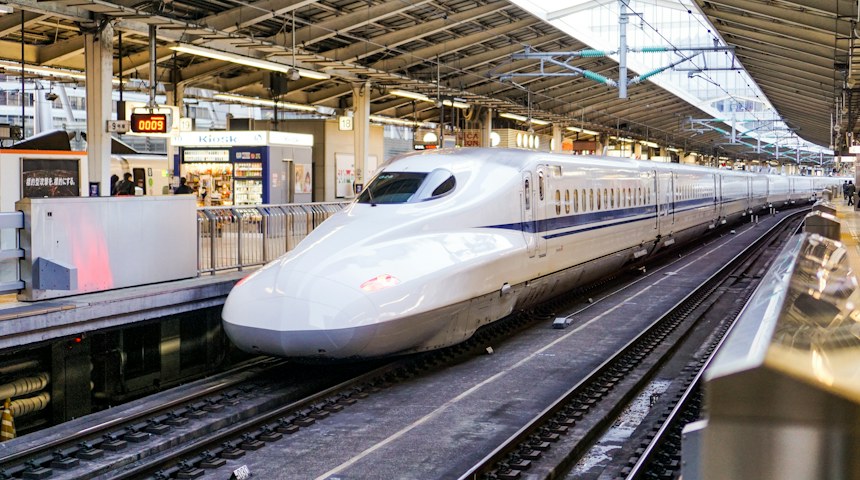
Transport is usually the largest single expense on a Japan trip, so it pays to think about it before you book anything else. The famous Japan Rail Pass became much more expensive after its price increase in 2023, and for many itineraries it no longer saves money. If you are simply travelling from Tokyo to Kyoto and Osaka and then flying home from Osaka, buying individual Shinkansen tickets is often cheaper than a seven-day pass. The pass still makes sense for travellers covering long distances in a short time, such as a route that includes Hiroshima, Kanazawa or northern Japan, so add up your planned journeys before deciding.
For travellers with more time than money, highway buses are the great secret of Japanese budget travel. Overnight buses between Tokyo and Osaka or Kyoto cost a fraction of the bullet train fare and save you a night of accommodation at the same time. Modern buses have reclining seats, curtains and charging points, and they arrive early in the morning so you can start exploring straight away. Domestic low-cost airlines are another option for longer hops, especially to Hokkaido, Okinawa or Kyushu, with fares that can be surprisingly low when booked in advance.
Inside cities, load a rechargeable IC card such as Suica or PASMO on your phone or as a physical card. It works on almost every train, subway and bus in major cities, as well as at convenience stores and vending machines. It will not reduce fares on its own, but it removes the confusion of buying paper tickets and stops you from accidentally paying for the wrong ride. Many cities also offer one-day subway passes, which are worth buying only on days when you plan to take four or more rides, so check your route each morning before you commit.
Where to Stay in Japan on a Budget
Accommodation is the second big cost, and Japan offers more affordable choices than most visitors expect. Hostels in Tokyo, Kyoto and Osaka are clean, modern and well run, and a dormitory bed is typically the cheapest option in central areas. Many hostels also have private rooms, which are a good compromise for couples or anyone who wants a little more privacy without paying hotel prices. Capsule hotels are a uniquely Japanese experience and are often cheaper than they look, with shared bathhouses, lounges and lockers included in the price.
Business hotels are the quiet hero of budget travel in Japan. Chains designed for travelling office workers offer compact but spotless private rooms with their own bathroom, often near major stations, at prices that compare well with hostel private rooms. Rooms are small, so pack light, but you get reliability, comfort and a great location. To save more, stay one or two stations away from the most famous districts rather than right in the centre. In Tokyo, for example, areas such as Ueno, Asakusa or Ikebukuro are well connected and usually cheaper than Shinjuku or Ginza.
Eating Well in Japan for Less
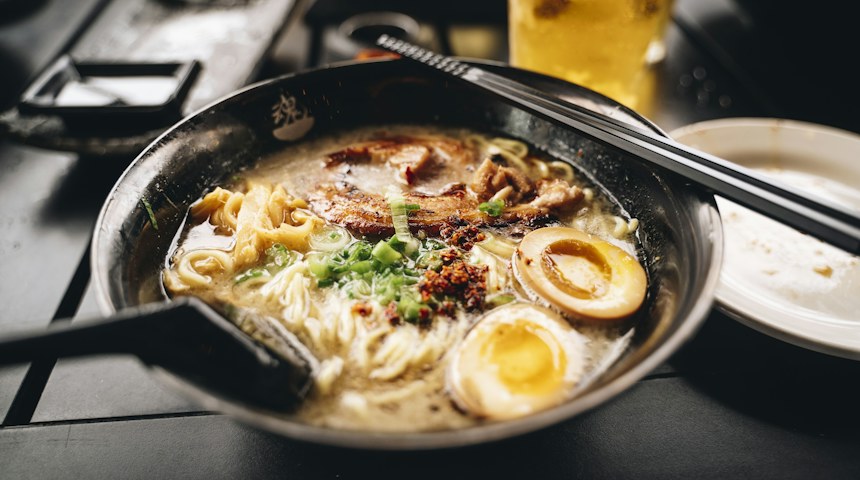
One of the great pleasures of Japan on a budget is that cheap food is also excellent food. Convenience stores such as 7-Eleven, Lawson and FamilyMart sell fresh rice balls, sandwiches, salads and hot meals at very low prices, and they are perfect for breakfast or a quick lunch between sights. Supermarkets and department store food halls discount their prepared meals and sushi in the evening, often by thirty to fifty percent in the hour before closing, which turns dinner into a bargain if you are willing to eat a little later.
For sit-down meals, look for the chains where local workers eat. Beef bowl restaurants, standing noodle bars and ticket-machine ramen shops serve hearty, satisfying meals at prices that are hard to beat anywhere in the developed world. Conveyor-belt sushi is another affordable treat, letting you sample a wide variety of fish without the cost of a traditional sushi counter. At lunchtime, many mid-range and even upscale restaurants offer set menus at a fraction of their dinner prices, so make lunch your main meal if you want to try somewhere special. Tap water is safe and free in restaurants, so there is no need to order drinks with every meal.
Free and Low-Cost Things to Do in Tokyo
Tokyo can be enjoyed for very little money once you know where to look. Walking through Shibuya Crossing, the backstreets of Shimokitazawa or the electric lights of Akihabara costs nothing, and these neighbourhoods are as much an attraction as any museum. Senso-ji Temple in Asakusa and Meiji Shrine near Harajuku are free to enter and are among the most atmospheric places in the city, especially early in the morning before the crowds arrive.
For views, skip the paid observation towers and head to the Tokyo Metropolitan Government Building in Shinjuku, where the observation decks have long been free and on clear days offer views stretching as far as Mount Fuji. Parks such as Yoyogi, Ueno and the outer gardens of the Imperial Palace are perfect for a picnic of convenience store snacks, and many museums offer discounted or free entry on certain days. Spending your days exploring on foot and your evenings in busy local food alleys is one of the cheapest and most memorable ways to experience the capital.
Saving Money in Kyoto and Osaka
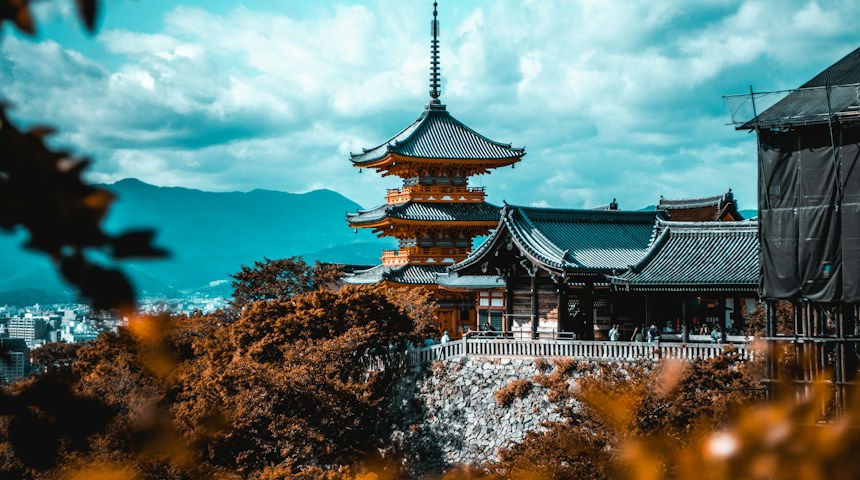
Kyoto is home to some of Japan’s most famous sights, and while many temples charge a modest entry fee, the costs add up quickly if you try to see everything. Choose a handful of must-see temples and balance them with free highlights. Fushimi Inari Taisha, with its thousands of orange torii gates winding up the mountain, is free and open at all hours, and walking it at dawn or in the evening is a magical experience. The Higashiyama district, the Philosopher’s Path and the riverside along the Kamo River are also free and offer some of the most beautiful scenery in the city.
Renting a bicycle is one of the smartest ways to save money in Kyoto, since the city is flat, buses can be slow and crowded, and many sights are spread out. In Osaka, the city’s reputation as the kitchen of Japan means street food is plentiful and inexpensive, and a walk through the neon lights of Dotonbori followed by takoyaki and okonomiyaki is a cheap and filling evening. Osaka also makes an excellent budget base, as accommodation is generally cheaper than in Kyoto and the train between the two cities is quick and inexpensive. Nara, with its friendly deer and enormous Buddha, is an easy and affordable day trip from either city.
Day Trips Worth the Fare, Including Mount Fuji
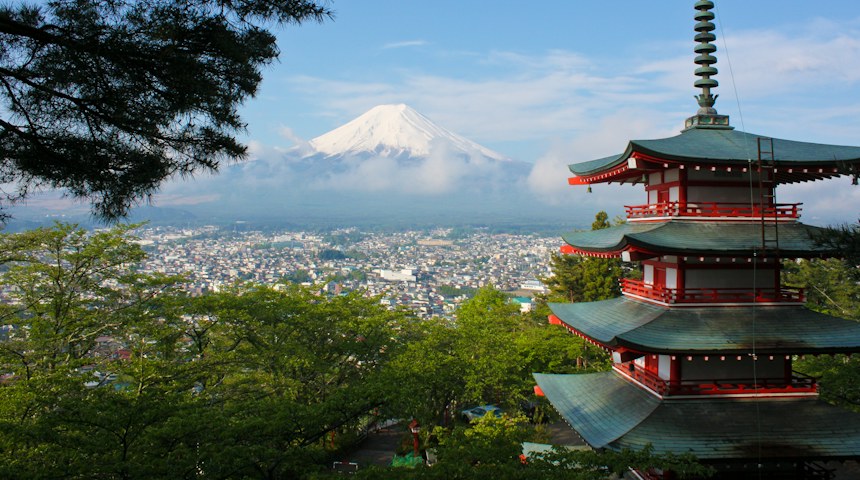
Not every great experience in Japan needs a long and expensive journey. From Tokyo, highway buses run from Shinjuku to the Fuji Five Lakes area around Lake Kawaguchiko, which offers some of the best views of Mount Fuji at a fraction of the cost of a guided tour. Go early in the day, as clouds often build around the mountain by the afternoon, and visit during the cooler months when visibility is usually at its best. Walking the lakeshore and the surrounding viewpoints costs nothing, and the scenery is unforgettable on a clear day.
Other rewarding day trips from Tokyo include Kamakura, with its giant bronze Buddha and seaside temples, and Nikko, known for its ornate shrines set in cedar forests. Many regional rail companies sell discounted round-trip passes for these destinations that include local transport, so compare them with standard fares before you go. Choosing one or two well-planned day trips rather than trying to cover the whole country will keep transport costs under control and leave you with more time to enjoy each place properly.
A Realistic Daily Budget for Japan
So how much does Japan on a budget actually cost? Prices change with exchange rates and seasons, so treat any figure as a guide rather than a promise. A careful backpacker staying in hostel dormitories, eating at convenience stores and casual chains, and focusing on free sights can manage on a modest daily budget outside of long-distance transport. A traveller who prefers private rooms in business hotels, enjoys a couple of sit-down meals each day and pays for a few attractions should plan for roughly double that amount, which still offers very good value for a country of Japan’s standard.
The best way to stay on track is to set a daily spending target and use your IC card and a simple notes app to keep an eye on it. Remember to budget separately for long-distance transport, which can be the single largest expense of your trip, and keep a little cash on hand because some smaller restaurants, temples and rural businesses still do not accept cards. Visitors can also claim tax-free shopping on many purchases over a certain amount by showing their passport, which is worth knowing if you plan to buy souvenirs or electronics.
Frequently Asked Questions About Japan on a Budget
Is Japan expensive to visit? Japan is more affordable than many visitors expect, especially with the weaker yen in recent years. Hostels, business hotels, convenience store meals, chain restaurants and free sights make a budget trip very achievable.
Is the Japan Rail Pass worth it? After its price increase, the pass is only worth it for itineraries with lots of long-distance travel in a short time. For a simple Tokyo, Kyoto and Osaka route, individual tickets are often cheaper.
What is the cheapest time to visit Japan? Late May, June, September to November outside holidays, and January to early March outside the New Year period usually offer lower prices than cherry blossom season, Golden Week and summer holidays.
Do you need cash in Japan? Cards and IC cards are widely accepted in cities, but some small restaurants, temples and rural businesses still prefer cash, so carry some yen with you.
More Japan Travel Guides
Travelling alone? Our guide to solo travel in Japan covers safety, eating alone and the best routes for a first trip. Spending time in the capital? Read our Tokyo travel guide for where to stay, what to see and how to get around.
For adventure, our guide to hiking in Japan covers the Kumano Kodo, the Japanese Alps and Mount Fuji. And if you want to splurge on one special night, discover our guide to the best luxury ryokan and onsen experiences.
Final Thoughts on Travelling Japan on a Budget
Japan rewards thoughtful travellers. By visiting outside peak holidays, choosing transport that fits your route, staying in hostels or business hotels, and eating where locals eat, you can enjoy Tokyo’s energy, Kyoto’s temples, Osaka’s food and Mount Fuji’s views without the eye-watering bill many people expect. The money you save can go towards the experiences that matter most to you, whether that is a night in a traditional inn, a special kaiseki meal or simply a few extra days exploring.
Above all, remember that some of the best moments in Japan cost nothing at all. A quiet morning at a shrine, an evening stroll through a lantern-lit alley or a conversation with a friendly shopkeeper will stay with you long after the trip is over. Plan smart, travel light and let Japan surprise you with just how much value it offers.